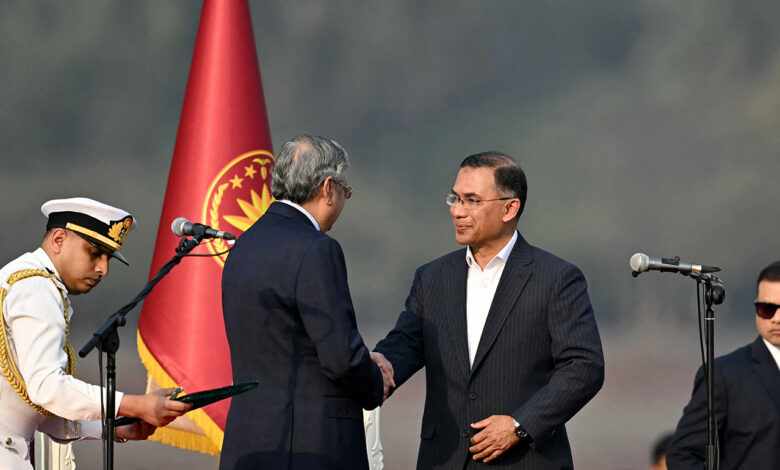
The announcement tests the durability of the political order established following the July 2024 uprising, which ended Hasina’s 15-year tenure. The new government, led by Prime Minister Tarique Rahman of the Bangladesh Nationalist Party (BNP), took office in February 2026 after winning a decisive electoral victory. The BNP secured 209 of 300 parliamentary seats, while the Bangladesh Jamaat-e-Islami (BJI) won 68 seats and the new student-led National Citizens Party (NCP) secured six. This election was widely regarded as the most credible in nearly two decades, with 68 percent of voters also supporting a referendum on the “July Charter,” a set of constitutional reforms aimed at preventing the overcentralization of power.
Hasina’s return is legally and politically complicated. In November 2025, Bangladesh’s International Crimes Tribunal convicted her in absentia on charges of crimes against humanity, sentencing her to death. Human rights organizations, including Amnesty International and Human Rights Watch, criticized the verdict on due-process grounds, though they did not dispute the underlying violence of the 2024 uprising. Additionally, the interim government under Nobel laureate Muhammad Yunus suspended the registration of Hasina’s Awami League in May 2025, barring the party from contesting the February 2026 election.

The political landscape has shifted significantly since Hasina fled Dhaka by helicopter on August 5, 2024. During the preceding months, protests against civil-service job quotas escalated into a mass uprising that resulted in the deaths of close to 1,400 people, according to United Nations counts, though the interim government’s tally was nearer 800. Unlike previous returns of exiled South Asian leaders, Hasina is returning into a context of institutional success rather than a power vacuum. The current government holds a two-thirds parliamentary majority and has begun consolidating power, with the European Union’s observer mission judging the recent election credible and competitive.
Hasina’s decision to return is viewed by analysts as a strategic political move, echoing her previous returns from exile in 1981 and 2007. She has spent the last two years in a high-security safe house in Delhi. The coming months will determine whether the institutions established during the transition can absorb her physical return without fracturing, particularly as the BNP government continues to struggle with restoring full political and economic stability.