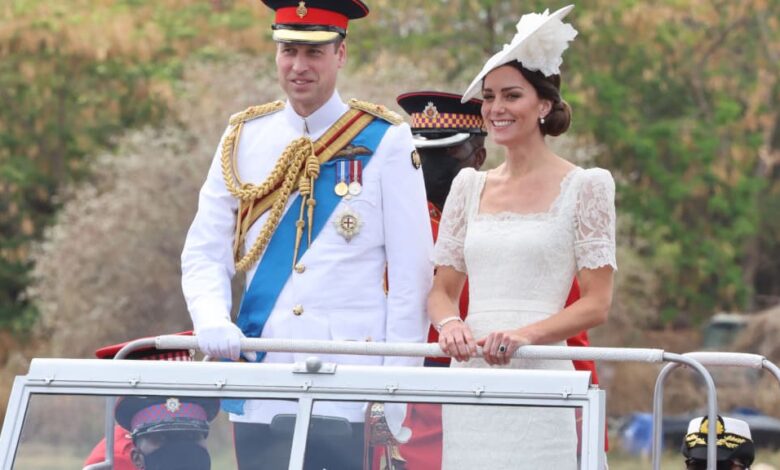
In Jamaica, the arrival of the royal couple was met with protests in Kingston demanding the establishment of a republic. The Advocates Network, a group of 100 prominent Jamaicans from politics, business, religion, and the arts, published an open letter urging Prince William to apologize for historic British crimes. The letter stated that the queen had done nothing to redress the suffering of ancestors during the period of British trafficking of Africans, enslavement, and colonialization. It further asserted that William, as a potential future leader of the monarchy, is a direct beneficiary of wealth accumulated through these practices and must redefine the relationship between the British monarchy and Jamaica through atonement and reparations.
Jamaican Prime Minister Andrew Holness announced that the government would begin the process of removing the queen as the country’s head of state. During a meeting with the royals, the Prime Minister stated that the country was “moving on” to become a republic. This development follows Barbados’s recent transition to a republic, a move that observers note signaled a shift in regional sentiment. In the Bahamas, a government committee urged the royals to issue a “full and formal apology for their crimes against humanity.” Upon arrival in Belize, the couple faced protests from villagers regarding a land dispute involving a charity Prince William patronizes.
Local campaigners have criticized the optics of the visit, describing scenes such as the pair shaking hands with children through wire fences and standing in an open-top Land Rover during a military parade as reminiscent of colonialism. Velma McClymont, a former Caribbean studies academic, described the visit as presumptuous, noting that Jamaica remains an “infant colony” rather than a fully independent entity in the eyes of many. In contrast, UK media coverage highlighted the couple’s activities, with outlets describing Kate as “dazzling” and focusing on her scuba diving in Belize. Jamaican media, however, characterized the visit as a public relations miscalculation rather than a success, reflecting a widening gap in perception between the monarchy and Caribbean populations.
The tour highlights a broader geopolitical shift where national identity and historical grievances are taking precedence over traditional royal loyalty. While the visit was a crucial test of the monarchy’s standing, the scale of the opposition suggests that the future of the British Crown in the Caribbean depends less on individual popularity and more on how these nations define their sovereignty. The immediate next step is the conclusion of the tour, after which the impact on Commonwealth relations and the pace of republican transitions in Jamaica and the Bahamas will be assessed.