
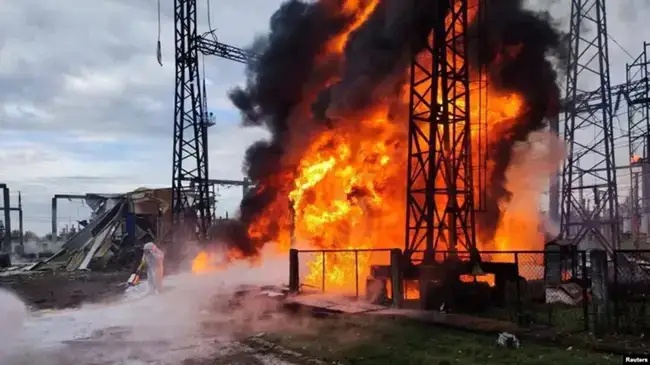
This localized strain is part of a broader, nationwide crisis that has escalated sharply in the final days of October and early November 2026. The Ukrainian Ministry of Energy confirmed on November 4 that Russian forces have intensified their assault on the energy grid, targeting both the sources of generation and the distribution network. The impact is no longer confined to a single oblast; portions of the population in Vinnytsia, Zhytomyr, Zaporizhzhya, Kirovohrad, Kharkiv, and Kherson oblasts are also experiencing power loss. The ministry described the situation in the capital region as “most critical,” where system operators are actively implementing emergency blackouts across Kyiv and the surrounding Kyiv Oblast due to “severe damage to energy equipment.”
The transition from scheduled maintenance outages to emergency restrictions marks a significant shift in the operational status of Ukraine’s power system. In Kyiv, emergency power outages continued for a second consecutive day on Wednesday, November 4, with regular blackout schedules suspended entirely. The latest emergency measures began at approximately 8:00 a.m. on November 3, following a large-scale Russian attack. DTEK, Ukraine’s largest private energy provider, announced that a massive barrage of missiles and drones completely halted electricity generation at three of its thermal power plants. The company noted that energy workers are “working without breaks or sleep whenever there is no air raid alert to stabilize the situation,” a testament to the relentless nature of the repair efforts required to counteract the physical destruction of the grid.
The technical implications of these attacks extend beyond the immediate loss of electricity, cascading into other critical infrastructure sectors. The disruption of power supply has directly impacted water services, illustrating the interdependence of modern urban utilities. On November 3, Kyiv’s municipal water utility, Kyivvodokanal, announced that the capital had temporarily lost water service. The company warned that even after electricity is restored, the process of restarting equipment, refilling water networks, and stabilizing pressure would take additional time. By the morning of November 4, water supplies were partially restored, but emergency crews continued to work through the night to increase pressure in the distribution network and bring supplies back to all city districts. In Mykolaiv, similar precautions are in place: all water supply and sewage pumping stations are equipped with backup power, and the company plans to switch facilities to generators within 30 minutes of an outage to maintain wastewater disposal and water supply.
The scale of the disruption is vast. In the Mykolaiv region alone, 232,358 customers are affected. The region has established contingency plans for a complete shutdown of centralized water supply, which includes distributing treated water via electric vehicles through 219 designated distribution points. As of the latest reports, 214 of these points are operational, with 89 equipped with generators. This infrastructure resilience is a critical component of the civil defense strategy, ensuring that even in the event of a “blackout”—defined as a large-scale systemic failure where a significant area experiences a complete or near-complete loss of power—basic services can be maintained through decentralized means.
However, the situation remains volatile and subject to rapid change. The Ministry of Energy emphasized that the situation “may change throughout the day,” urging residents to follow updates from local distribution system operators. In Kharkiv Oblast, grid operators are managing a drop in high-voltage network voltage caused by equipment damage from prior attacks, with plans to transition back to scheduled outages only once the power system stabilizes. Meanwhile, nuclear power plants are operating at reduced capacities, a direct consequence of the attacks on the broader grid. A return to full output is expected to occur gradually as workers repair the damaged networks, but this timeline remains contingent on the cessation of further strikes and the speed of restoration work.

The pattern of attacks reveals a strategic focus on degrading the capacity of the grid to withstand sustained pressure. By targeting both generation assets, such as the DTEK thermal plants, and the distribution network, the attacks create a compounding effect that slows down restoration efforts. In Odesa, a similar trajectory was observed in late October, where scheduled maintenance on October 19 was complicated by massive nighttime attacks on October 17 and 16. On October 17, rolling blackouts were implemented for 12 hours, followed by strikes that left approximately 24,000 consumers in various districts without power. The cumulative effect of these incidents is a grid that is perpetually in a state of repair, with strict electricity limitations imposed on the industrial sector to prioritize residential supply.
As the day progresses on November 4, the focus for utility workers in Kyiv and Mykolaiv remains on stabilization. The emergency restrictions in Kyiv are likely to remain in effect until the physical damage to the high-voltage equipment is sufficiently repaired to allow for a return to normal operations. The next verified development will hinge on the success of these repair crews in restoring a stable power supply to the capital region and whether the emergency blackouts in other oblasts, such as Kharkiv and Zaporizhzhya, can be converted back into scheduled, manageable outages. Until then, the 232,000 customers in Mykolaiv and the residents of Kyiv will continue to rely on the resilience of backup generators and the tireless efforts of the energy sector to keep the lights on in a fractured grid.