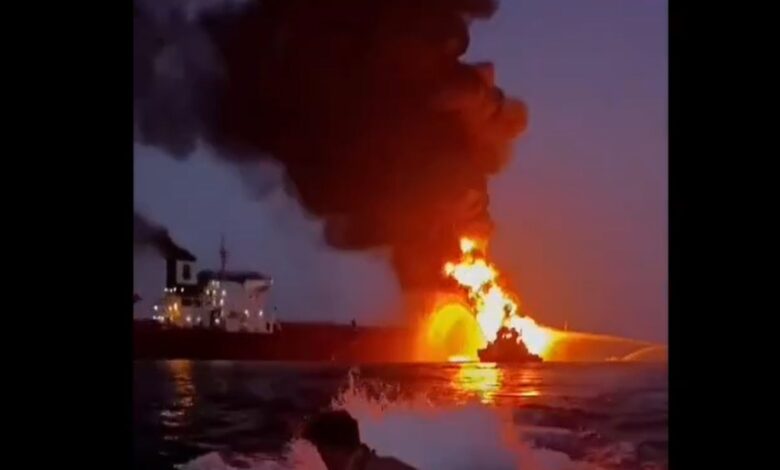
The attack on the *Navig8 Messi* was not an isolated event. On the same day, UKMTO (United Kingdom Maritime Trade Operations) received a second report from a company security officer stating that their vessel was hit by a projectile during an outbound transit through the strait. All crew on the second vessel were reported safe, with no environmental impact noted. These incidents occurred against a backdrop of constant and active Iranian presence in the waterway. UKMTO reports that IRGC activities, including UAV overflight, targeted surveillance of merchant shipping, and occasional VHF hailing, have persisted, demonstrating an intent to assert presence along key transit lanes and maintain pressure on transiting vessels. Consequently, traffic through the waterway is currently below normal, ranging from single to low-double-digit transit counts per day, a significant drop from the higher escort volumes seen earlier in the week.
Despite these security disruptions, data indicates that LNG traffic through the Strait of Hormuz hit its highest level in October since the war with Iran began. This surge in volume highlights the critical dependency of global energy markets on this narrow waterway, even as the risk profile escalates. The juxtaposition of record transit volumes with recurring physical attacks underscores a fragile stability where commercial necessity overrides safety concerns for many operators. The *Navig8 Messi*, a tanker chartered by Adnoc, exemplifies this tension; its return to service after the August attack suggests a calculation by operators that the economic imperative of the route outweighs the demonstrated threats to vessel safety.
The implications of these attacks extend beyond immediate maritime safety to broader geopolitical and energy security strategies. In Pakistan, the recent attack on a Pakistan-bound LNG tanker has stirred intense debate over the efficacy of Islamabad’s diplomatic efforts to secure safe passage from Iran. The incident highlights the limits of bilateral agreements in guaranteeing commercial safety in a contested zone. Reduced LNG deliveries, already attributed to U.S.-Israeli attacks on Iran, have disrupted daily life and business in Pakistan, leading to gas rationing and nighttime power cuts. These tangible economic impacts are driving an urgent policy shift toward diversifying gas suppliers and supply routes to mitigate the vulnerability of relying on a single, high-risk chokepoint.
Meanwhile, regional energy majors are evaluating alternative logistics. ADNOC Gas is reportedly still assessing options to bypass the Strait of Hormuz entirely. Such logistical re-routing is complex and costly, often involving longer distances and different infrastructure requirements, but it represents a strategic move to decouple supply chains from immediate conflict zones. The decision to bypass the strait would require significant adjustments in shipping schedules, storage capacity, and potentially the construction or leasing of alternative terminal facilities. For producers like ADNOC, the calculus involves balancing the operational efficiency of the established Hormuz route against the long-term security risks and potential reputational or insurance costs associated with recurring attacks.
U.S. military involvement in the region has also intensified. On Saturday, U.S. forces targeted and disabled an Iran-linked bulker, the 1999-built *Huda*. U.S. Central Command asserted that the vessel’s crew ignored repeated warnings and attempted to violate the U.S. naval blockade on Iranian ports. This action signals a broader enforcement posture that may further complicate navigation and commercial operations in the region. The combination of IRGC harassment, direct attacks on commercial tankers, and U.S. naval enforcement creates a multi-layered security environment that complicates risk assessment for insurers and shipowners alike.
The energy market is thus navigating a period of acute uncertainty. While the volume of LNG moving through Hormuz remains high, reflecting the continued demand for natural gas in importing nations, the physical security of that supply is increasingly compromised. For consumers in countries like Pakistan, the abstract geopolitical tensions translate into immediate reliability issues, such as power cuts and fuel rationing. For producers and traders, the challenge is to maintain flow through a hostile environment or to invest in the capital-intensive alternative of rerouting supply. The next few weeks will likely see a test of both the durability of diplomatic safe-passage deals and the resilience of global supply chains in the face of sustained maritime conflict. The *Navig8 Messi*, now a fire-damaged wreck or salvage case, serves as a stark reminder that the cost of energy security in the modern era is being paid in steel, fuel, and diplomatic capital.