
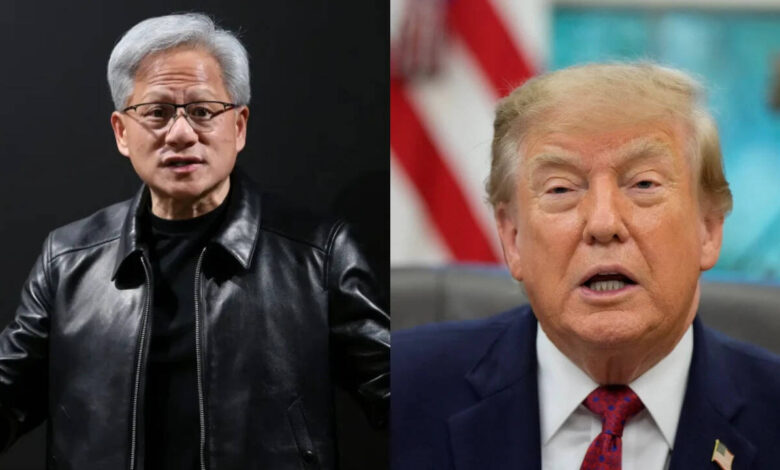
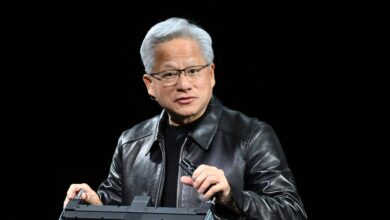
The personal confession serves as the entry point to a complex web of national security concerns involving one of the world’s most valuable technology companies. While Huang expressed deep remorse for the pain caused to his family, he also addressed the broader scrutiny surrounding his conduct. In the same communication, he stated that he had “fallen short” of his responsibility to serve colleagues, the board, partners, and shareholders. Crucially, he assured staff of his complete cooperation with the Nvidia board’s ongoing investigation into foreign intelligence matters, a probe launched in response to reports that he was the target of a “foreign intelligence effort.”
The investigation centers on allegations first detailed in a report by The New York Times last month. According to the report, U.S. spy agencies determined that a Chinese intelligence asset had been sharing information with the Chinese government. The agency identified the alleged asset as Alice Huang, an executive at Megaspeed, a Singapore-based data center company. Ms. Huang has no familial relation to the Nvidia CEO, but reports indicate she had developed a close relationship with him. The Financial Times and CNBC have corroborated the details of the intelligence assessment, noting that the relationship raised suspicions of espionage.
The commercial stakes of this investigation are immediate and tangible. On Monday, Nvidia shares slid approximately 5% in premarket trading, reflecting investor anxiety over the potential implications for the company’s integrity and regulatory standing. The drop underscores how closely the market links the personal conduct of top executives at critical technology firms to broader geopolitical and security risks. For a company whose chips are central to the global AI boom and heavily regulated under U.S. export controls, any suggestion of foreign state influence is treated with extreme seriousness.
Megaspeed, the company where Alice Huang served as an executive, has previously been under the microscope of regulatory authorities. Last year, the company drew the attention of the U.S. government due to suspicions that it was smuggling Nvidia chips to China, a practice that would circumvent strict U.S. restrictions designed to prevent advanced computing hardware from reaching Beijing. The Singaporean government also opened an investigation into Megaspeed for potentially violating local laws. At the time, Megaspeed denied these allegations, stating in a statement from last December that it operated fully within the bounds of all applicable export control regulations and maintained the highest standards of legal and ethical conduct. The company claimed it had already been investigated and cleared by multiple institutions, including the U.S. Commerce Department and Nvidia itself. It remains unclear from public reports whether Alice Huang was operating independently or as an agent of Megaspeed during the period in question.
Prior to the board’s announcement, Jensen Huang had addressed the relationship in an interview with Bloomberg. He denied an inappropriate relationship with Ms. Huang and claimed she was no longer employed at Megaspeed. “Our relationship, our interactions, have been related to Megaspeed, and it was all completely normal and not unusual,” Huang told the outlet. This prior denial now stands in sharp contrast to the board’s decision to launch an independent review, suggesting that internal or external evidence may have prompted a more rigorous examination of the facts.
The geopolitical dimension of the story adds a layer of diplomatic tension. China’s Foreign Ministry spokesperson, Guo Jiakun, responded to the reporting on Monday by dismissing the claims, stating that the “so-called Chinese spy narrative” was unsubstantiated. Similarly, a spokesperson for the Chinese embassy in Washington, D.C., previously characterized U.S. actions in this context as an operation of “groundless smears and slanders” against China. These official denials highlight the broader contest between U.S. national security priorities and diplomatic relations with Beijing, a friction point that has intensified alongside the ongoing semiconductor trade war.
For Nvidia, the outcome of the board’s investigation will be critical. The company has emphasized that Huang fully supports the review and has committed to cooperating with it. The investigation is expected to examine the nature of the interactions between the CEO and the alleged intelligence asset, as well as any potential breaches of security protocols or export control laws. While Nvidia has not disclosed specific findings or a timeline for the probe’s conclusion, the establishment of an independent inquiry signals that the board is treating the matter as a governance issue of the highest order.
The incident also raises questions about the vetting and oversight mechanisms in place for executives at companies deemed critical to national security. As AI and advanced computing become central to military and economic strategy, the personal lives and business partnerships of tech leaders are increasingly scrutinized for potential vulnerabilities. The market’s reaction, with shares down nearly 5%, suggests that investors are factoring in the risk of regulatory fallout or reputational damage, even before any definitive findings are released.
As the investigation proceeds, the focus remains on the verifiable facts rather than speculation. The Nvidia board’s action represents a formal institutional response to credible intelligence reports, distinguishing it from mere media rumor. The company’s leadership is now tasked with delivering a transparent account of the relationship and any associated risks, a process that will likely dominate the next phase of the story. For now, the combination of a personal apology, a formal corporate probe, and a volatile market reaction encapsulates the heightened stakes facing the tech industry in an era of intense geopolitical competition. The next confirmed development will be the board’s report on the findings of its independent investigation, which will determine whether any further actions are required to safeguard the company’s integrity and compliance with international laws.


2 Comments