
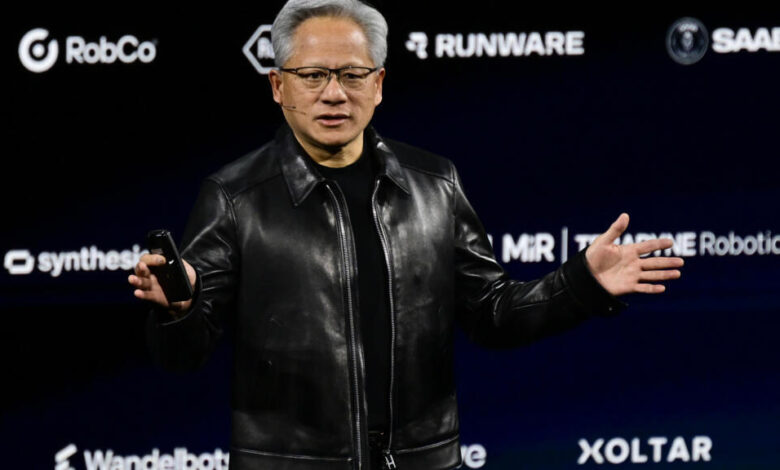
In a statement, Nvidia’s board of directors said it had “no reason to believe that either national security or Nvidia secrets were compromised.” However, the board announced that a group of independent directors, assisted by outside independent counsel, would oversee the investigation to examine all available information. Huang, 63, will remain in his role as chief executive officer during the inquiry. The board stated that Huang “fully supports the review and has committed to cooperating with it.”
The controversy centers on Alice Huang, a Chinese citizen who serves as an executive at Megaspeed, a Singapore-based data center company. According to US intelligence sources cited by The New York Times, Alice Huang had been recruited by China’s Ministry of State Security. She was previously a television reporter in China before joining Megaspeed, which has become one of Nvidia’s largest customers in Southeast Asia. The two Huangs are not related, according to the report.
In an internal email to Nvidia staff, Jensen Huang apologized for his personal conduct. “I was unfaithful to my wife,” he wrote. “My actions hurt her and our children. There is no excuse for what I did. I am deeply sorry.” He also stated his commitment to protecting the company and supporting America’s national security. Huang, who was born in Taipei and spent part of his childhood in Taiwan before moving to the US, co-founded Nvidia in 1993. The company has since grown from a manufacturer of computer graphic cards to an essential supplier of the specialized chips powering the global artificial intelligence boom.
The timing of the reports is particularly sensitive given Nvidia’s strategic importance to US export control policies. Nvidia’s advanced processors are central to the race to develop AI, and US restrictions aim to limit China’s access to these cutting-edge semiconductors. US intelligence reportedly determined that Alice Huang was feeding information directly to Beijing. Furthermore, the US is investigating Megaspeed over suspicions that it was helping Beijing bypass export restrictions. According to The New York Times, Megaspeed purchased more than $4.8 billion worth of Nvidia chips over the past two years.
The matter has drawn attention from the highest levels of the US government. US lawmakers have invited Jensen Huang to brief them on the reports. President Donald Trump, who serves on the President’s Council of Advisors on Science and Technology, addressed the situation at a recent event, calling it “very complex” but expressing hope that everything was okay with Huang. Trump, who has described Huang as “smart” and “amazing,” stated that the administration would look into the matter “very closely.” Secretary of State Marco Rubio declined to comment on Sunday, citing the nature of the situation and its status as an internal corporate matter, as he departed for a G7 meeting in Paris.

Nvidia’s financial standing remains robust despite the scrutiny. The Santa Clara, California-based company has regularly exceeded Wall Street earnings expectations for the past three years. In August, the company reported quarterly profits of $59.69 billion. Huang’s personal wealth has also seen a significant rise, with Forbes estimating his net worth at $162.2 billion as of Sunday, placing him roughly on par with investor Warren Buffett.
The investigation marks a significant moment for a company that has become a geopolitical flashpoint in the technology sector. While Nvidia maintains that no secrets were compromised, the potential intersection of personal relationships and state-sponsored intelligence gathering raises serious questions about the security of critical technology supply chains. The outcome of the independent review will be closely watched by regulators, investors, and national security officials alike.


One Comment