
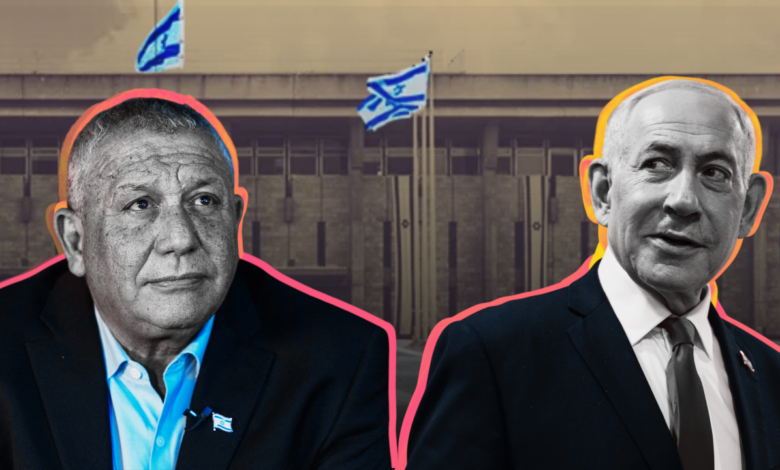
The political arithmetic behind Herzog’s decision is rooted in the fragmented results of the recent vote. In the 120-member Knesset, a minimum of 61 seats is required to secure a majority and form a government. Neither of the two principal contenders achieved this threshold independently. Netanyahu’s Likud party emerged as the largest single party with 27 seats, but his broader right-wing coalition managed to secure only 53 seats, leaving it eight seats short of the necessary majority. Conversely, Eisenkot’s Yesh Atid party won 21 seats, and his broader Change Bloc secured a total of 48 seats. This structural deadlock meant that neither leader could claim a clear path to power based on their initial electoral performance alone.
The tie-breaking factor in the president’s deliberations was the support of specific parliamentary groups. According to President Herzog, factions representing a combined 67 members of the Knesset recommended Eisenkot for the task of forming the government, while groups representing 46 members supported Netanyahu. A further group of seven members, associated with the United Torah Judaism (UTJ) party, declined to recommend a candidate. This numerical superiority in recommendations provided the institutional basis for Herzog’s choice. The support for Eisenkot was notably bolstered by the Joint List and the Ra’am party, two Arab-led political entities that won a combined 19 seats (12 for the Joint List and 7 for Ra’am). Their explicit recommendation of Eisenkot’s name strengthened his claim during the presidential consultations.

Despite the formal mandate, the path to a functioning government remains fraught with institutional and ideological challenges. The primary obstacle for Eisenkot lies within his own coalition. Several hardline members of the Change Bloc have publicly opposed any form of support from Arab parties. Consequently, while the Joint List and Ra’am provided the critical votes to secure the presidential recommendation, Eisenkot must now navigate the internal friction of retaining these partners while holding his centrist and right-leaning allies together. The distinction between a presidential recommendation and a parliamentary majority is stark; the 67-seat recommendation does not guarantee a stable 61-seat governing majority if key partners withdraw or if internal disagreements fracture the bloc.
The political dynamics are further complicated by the stance of Benjamin Netanyahu. Eisenkot has repeatedly stated during the campaign that he would not join a coalition government that includes Netanyahu. However, on Saturday night, the Yesh Atid party issued a statement suggesting that Likud and its allies could potentially be part of a broader arrangement. This development has introduced uncertainty into the negotiations. It is important to note that no formal proposal for Netanyahu to join an Eisenkot-led government has been extended, and the two leaders remain at odds regarding the terms of any shared political future. The possibility of Likud joining a center-left or centrist government remains a speculative scenario that could radically alter the current political equation, yet it conflicts with Eisenkot’s prior public commitments.
The timeline for these negotiations is strict. Eisenkot has been granted 42 days to form a government. If he fails to secure the required majority within this period, the mandate will likely revert to the next most viable candidate, potentially offering Netanyahu another opportunity to attempt coalition-building. Should both leaders fail to form a government, Israel faces the prospect of another general election, a scenario that has become increasingly common in the country’s recent political history.

The outcome of these negotiations will determine the direction of Israel’s governance, policy, and international standing. The current situation highlights the fragility of Israel’s proportional representation system, which has frequently produced hung parliaments. For the public, the uncertainty continues as the nation waits to see if Eisenkot can bridge the ideological gaps within his bloc and with potential partners. The next several weeks will be critical, with the Knesset’s composition and the willingness of minority factions to support a new administration serving as the decisive factors in whether Israel moves toward stability or returns to the ballot box.
As Eisenkot prepares for the formal ceremony at the presidential residence, the political spotlight remains fixed on his ability to translate a presidential mandate into a parliamentary reality. The interplay between the Arab-led parties’ support, the internal divisions within the Change Bloc, and the strategic positioning of Netanyahu’s Likud will define the next chapter in Israel’s ongoing political struggle.



One Comment