
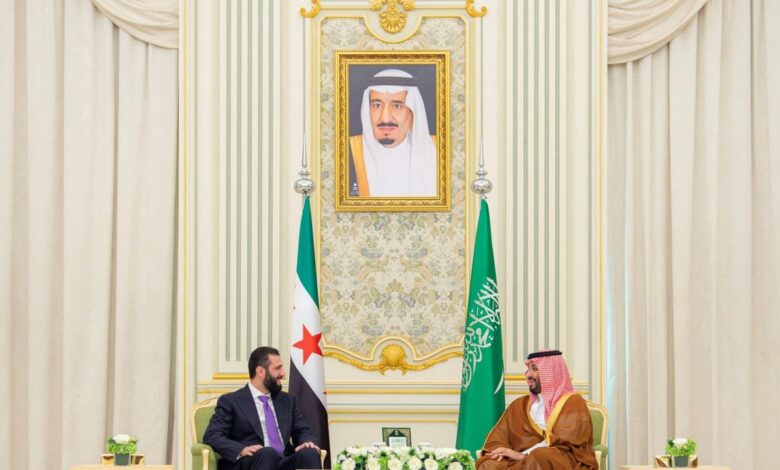
The deployment is not merely a logistical exercise but a geopolitical signal of profound significance. According to three officials with knowledge of the plans, these troops are expected to deploy along the Saudi border and potentially assist in countering Iranian-backed rebels in neighboring Yemen. While the AP reports that Syrian military advisers have already been deployed to Saudi Arabia, it notes that these specific combat-ready forces have not yet been sent to the Yemeni front. This distinction highlights a phased approach to integration, moving from advisory roles to tangible military presence.
The timing of this development is critical. It follows the collapse of the Assad regime in 2024, a turning point that ended decades of Syrian alignment with Iran, Russia, and Hezbollah. Under the previous government, Damascus operated outside the traditional Arab state system, acting as a key node in a regional network of proxies supported by Tehran. The new trajectory, however, sees Syria shifting its orientation east and south, toward Riyadh and Ankara. A Syrian delegation led by Khaled Khattab, commander of the 82nd Division, recently completed a two-week visit to Saudi Arabia, where several dozen Syrian military personnel were already present in advisory capacities. The upcoming deployment of 600 special forces fighters represents the next, more substantial step in this process.

Riyadh’s interest in this partnership is driven by a desire to reclaim a historic leadership role in the region. For years, Saudi relations with Turkey were cold, and Syria was a source of strategic friction due to its proxy wars and alignment with Iran. Today, the landscape has changed dramatically. The new pact involves not only Syria but also Pakistan and Turkey, suggesting a broader Saudi-led regional order. By integrating Syria into this framework, Riyadh is not only securing its northern and western borders but also positioning itself as a central player in both Arab and Muslim geopolitical affairs. This represents a net gain for Saudi Arabia, which has historically sought to anchor regional stability through strong state-to-state alliances rather than reliance on external powers.
The historical context of this shift is deeply rooted in the post-colonial Middle East’s complex evolution. Since the 1940s, the region has seen major powers pivot between alliances, often driven by Cold War dynamics. In the 1950s and 1960s, Egypt and Syria were backed by the Soviets, leading to crises in Lebanon and Jordan that required direct intervention by the United States and the United Kingdom. The Eisenhower administration, for instance, ordered around 5,000 U.S. Marines to land in Beirut in 1958 to stabilize the pro-Western government against Nasser-inspired unrest. These early decades established a pattern where regional stability was often contingent on external great power competition.
Subsequent decades brought further upheaval. The Islamic Revolution in Iran, the Soviet invasion of Afghanistan, and the 1990 invasion of Kuwait by Iraq all reshaped the map of influence. The U.S. deployment of forces to Saudi Arabia after the 1991 Gulf War entrenched American military presence in the Gulf states, from Kuwait to Qatar and Bahrain. However, the post-2003 invasion of Iraq and the Arab Spring eroded the stability of historic Arab states like Iraq, Libya, and Syria. The rise of groups like ISIS and the Houthi movement in Yemen further destabilized the region, often fueled by the power vacuums left by state collapse.

Only in the last decade has there been a tentative shift back toward the re-emergence of cohesive Arab states. Iraq’s defeat of ISIS in 2017, though complicated by ongoing struggles with Iranian-backed militias, marked a step back toward sovereignty. Egypt, under Abdel Fattah al-Sisi, has also sought to restore its historic regional weight. Syria’s current pivot is part of this broader trend. By aligning with Saudi Arabia, Syria is not just seeking security guarantees; it is attempting to rejoin the fold of the Arab and Islamic state system. Damascus, along with Cairo and Baghdad, has long served as centers of Arab and Islamic culture and rule. The current diplomatic and military engagement is an effort to rebuild these institutions after years of fragmentation.
Nevertheless, the path to a successful and stable Syria remains long and uncertain. The integration of Syrian forces into a Saudi-led framework raises questions about long-term sustainability and the potential for friction with other regional actors, particularly Iran and Russia, who have significant interests in the region. The deployment of 600 special forces fighters is a concrete step, but it is only one part of a larger, ongoing process. As the initial forces move into position along the Saudi border, the coming weeks will reveal whether this partnership can withstand the pressures of regional rivalry and internal instability. The outcome will likely determine the future shape of the Middle East’s security architecture.