
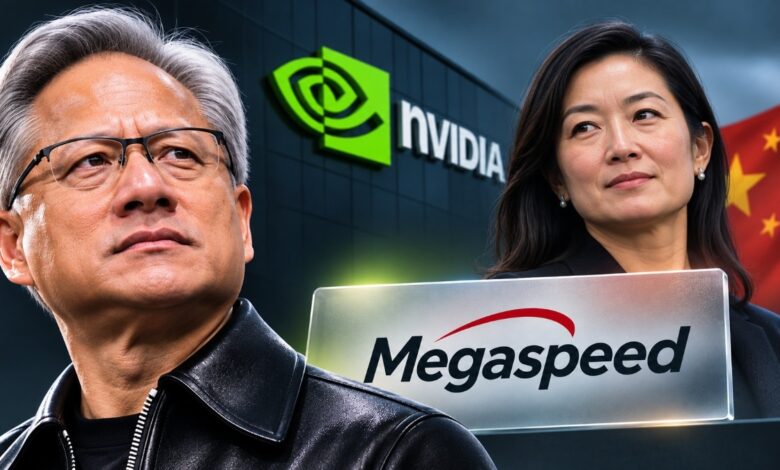
The revelation has placed intense scrutiny on the mechanisms of U.S. export controls and the influence wielded by corporate leaders in shaping technology policy. The core issue extends beyond the personal admission of infidelity; it centers on the movement of restricted hardware. Megaspeed International is not a casual buyer. It is a cloud computing and AI infrastructure company that describes itself on its website as an “Nvidia cloud partner” in the Asia-Pacific region. The firm purchases billions of dollars in Nvidia chips, specifically including the GB200 NVL72 and HGX H100 systems, to provide GPU computing services for AI model training, machine learning, and rendering in Southeast Asia and the Middle East. Because training large AI models requires massive computational power, Megaspeed operates large data centers filled with thousands of Nvidia GPUs.
The concern for U.S. authorities is that this legitimate commercial channel may have been exploited. The U.S. government is currently probing reports that 50,000 Nvidia chips sold to Megaspeed were seemingly missing following an audit. This discrepancy has raised questions about whether chips intended for authorized markets were diverted to China, a move that would violate export restrictions designed to blunt China’s technological advances in AI. Megaspeed has categorically denied these allegations, stating that investigations by various agencies found no irregularities and that it did not illegally send chips to China. The company maintains that its business is strictly limited to providing computing services in its authorized regions.
The timeline of events suggests a convergence of personal and political dynamics. Jensen Huang, who has been married to his college sweetheart Lori for more than 40 years, met Alice Huang in early 2024. According to reports, Alice Huang’s background includes work as a television host and banker before joining Megaspeed. The relationship coincided with a period of intense lobbying by Huang regarding chip sales. At the same time he was entangled in the relationship, Huang was actively pushing the U.S. administration to loosen restrictions on AI chip exports to China. He lobbied President Donald Trump, with whom he has a close relationship, to lift export controls that had been initially imposed during the Biden administration in 2022. There were at least three documented meetings between the two where the administration responded with policy changes that made it easier for Nvidia to sell advanced chips to China. Critics have characterized these efforts as part of a “honeytrap,” arguing that Huang was compromised while attempting to secure favorable trade terms for his company.
Nvidia has responded to the crisis with a formal statement, acknowledging that Huang “has been the target of a foreign intelligence effort.” The company announced that its board of directors, led by independent members and an external law firm, is initiating an investigation. The board emphasized that it “prioritizes US national and economic security” and stated that while there is “no reason to believe that either national security or Nvidia secrets were compromised,” the inquiry will examine all available information. The company’s stock initially fell more than 4% on Monday following Huang’s email to staff, in which he admitted to being “unfaithful” and having “fallen short” of his responsibilities. However, shares edged higher in premarket trading on Tuesday as investors weighed the potential fallout, with some viewing the situation as a personal matter that may not fundamentally alter Nvidia’s technical standing.
The broader implications of this case lie in the vulnerability of the global AI supply chain. Nvidia’s dominance in AI hardware makes it a critical node in the technological race between the United States and China. The incident highlights the difficulty of enforcing export controls when the primary buyers are legitimate multinational corporations operating in gray areas like Singapore. It also raises questions about the efficacy of monitoring large-scale chip shipments. While U.S. officials, including President Trump, have expressed confidence in Huang’s character, stating he is an “honorable guy” and that the FBI is looking into the matter, the technical audit of the missing chips remains the central unresolved issue. The investigation will determine whether the chips were truly diverted, which would represent a significant breach of export control compliance, or if the discrepancy is a clerical or accounting error. Until the board’s inquiry concludes, the relationship between Nvidia’s commercial interests and U.S. national security policy remains a point of intense debate.


One Comment