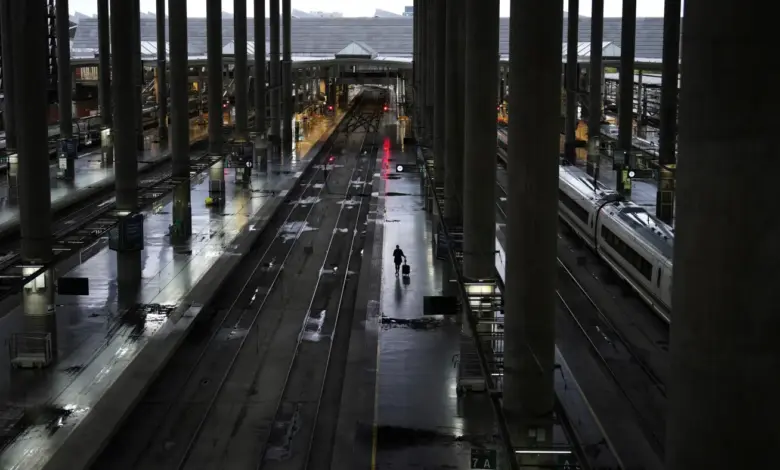
The strike has caused significant disruptions across the eurozone’s fourth-largest economy. Public transport systems in major cities, including Madrid and Barcelona, faced standstills or long delays during the morning rush hour. Many schools and universities closed or operated at minimal capacity. In the capital, the strike compounded an ongoing industrial action by teachers that began nearly a month ago. Union representatives reported widespread participation, citing work stoppages of 90 percent in the automotive and port sectors, 85 percent in the meat industry, 82 percent in waste collection, and 75 percent in the energy sector. Conversely, the CEOE, which represents business leaders, characterized participation as “low” in most sectors, noting that the impact varied by region.
The central demand of the strike, summarized by the slogan “Wages, housing and prices,” reflects widespread anger over the cost of living. Average rents in Spain have nearly doubled over the last decade, placing heavy strain on household budgets. The movement gained momentum following the nationally televised eviction of Maricarmen Abascal, an 87-year-old pensioner in Madrid, who died days later. Her death symbolized the plight of many Spaniards who feel priced out of the housing market. The two main unions, UGT and CCOO, formally registered the strike with the Ministry of Labour, framing the issue not as a lack of wealth, but as a failure in its distribution.
The political context is acute. Prime Minister Pedro Sanchez called for the early election after his minority government failed to pass a package of housing measures in response to massive protests, which included a five-week occupation of Madrid’s Puerta del Sol square. Sanchez defended the right to protest while urging a common governmental response. In contrast, opposition parties have criticized the timing of the strike. Albert Núñez Feijoo, leader of the conservative Popular Party (PP), which leads current opinion polls, called the action a “serious mistake,” warning that unions risk being permanently linked to the government’s political difficulties. He also cited a recent high-speed train collision that killed 69 people as a reason for public fatigue with industrial unrest.
Support for the strike extended beyond labor unions to the cultural sector, with over 800 artists, writers, and intellectuals signing a manifesto supporting the action. The manifesto called for rent caps in high-demand areas and a halt to forced evictions. In the early hours of the strike, minor incidents were reported, including roadblocks with burning tires in Barcelona and scuffles between picketers and police near Madrid’s main wholesale market. Unions have called for large-scale marches through the city centers of Madrid and Barcelona on Wednesday, aiming to sustain pressure on political leaders in the lead-up to the November 29 vote.