The decision to send Shih, who previously represented Taiwan at the 2007 APEC summit in Sydney, is driven by the complex legal and political status of the island within the organization. Taiwan has been a full member of APEC since 1991, participating under the designation “Chinese Taipei.” This arrangement allows the self-governed island to engage in regional economic cooperation without formally resolving the sovereignty dispute with Beijing, which insists that Taiwan is an inalienable part of China’s territory and not a separate nation. By selecting a prominent figure from the private sector rather than a state official, Taipei navigates the constraints imposed by China’s opposition to the island’s participation in international exchanges as a sovereign entity.
Presidential spokesperson Karen Kuo stated that Shih was chosen for his “extensive experience in international exchanges” and his role as a “key figure in the development of Taiwan’s technology industry and the internationalisation of its brands.” However, the announcement was accompanied by a sharper diplomatic message. Kuo emphasized that Taiwan has consistently participated in APEC meetings on an equal basis with other members, a practice she described as established organizational custom rather than a concession to China’s “one-China principle.” In response to Beijing’s stance, Taipei has called on the host nation to provide formal, written assurances that these established norms will be upheld during the summit.
Beijing’s position remains firm. The Taiwan Affairs Office stated that participation would be handled strictly according to the one-China principle and the provisions of APEC’s memorandum of understanding. Spokesperson Zhang Han reiterated that the continent’s handling of Taiwan’s participation is consistent with previous years, but the specific demand for a written guarantee from Taipei suggests that the island’s leadership perceives a heightened risk of political interference. This concern is rooted in the fact that APEC is one of the few international organizations where Taiwan participates alongside China, making it a sensitive arena where diplomatic disputes often spill over into economic and technical discussions.

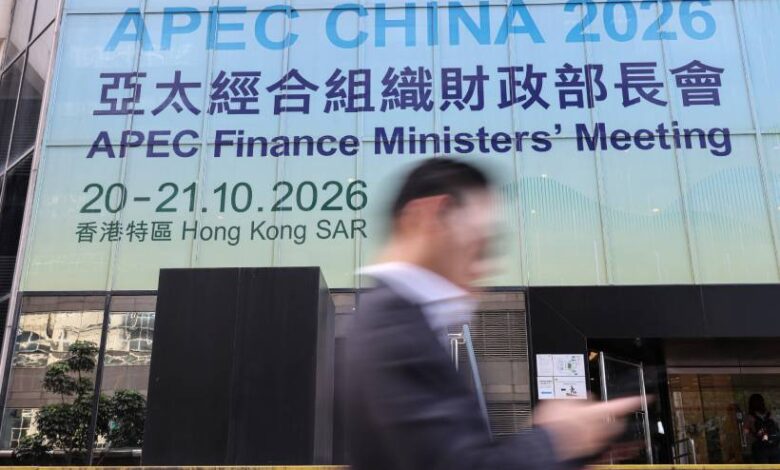
The timing of this diplomatic exchange adds another layer of complexity. The summit in Shenzhen is not merely a regional economic gathering; it is also the venue for a high-profile meeting between US President Donald Trump and Chinese President Xi Jinping. The presence of the world’s two largest economies elevates the stakes for all participants. For Taiwan, the summit represents a critical opportunity to maintain its visibility and economic integration in the Asia-Pacific region, but it also exposes the limits of its diplomatic space. If Beijing were to impose additional political conditions or disrupt the proceedings, it could undermine the summit’s economic objectives and complicate the broader US-China dialogue.
Historically, APEC has functioned as a platform for economic dialogue that deliberately avoids deep political entanglements, allowing members with differing political systems to collaborate. However, the increasing politicization of cross-strait relations has tested this model. Taiwan’s insistence on “equality and dignity” is a direct challenge to any attempt by the host nation to use the summit to reinforce its sovereignty claims. By demanding a written guarantee, Taipei is attempting to create a verifiable record of Beijing’s commitment to the status quo, potentially serving as a diplomatic shield against future accusations of violating established protocols.
The appointment of Stan Shih reflects the broader strategy of Taiwan’s leadership, particularly under President Lai Ching-te, to project stability and continuity in international engagement. Shih’s background in the technology sector aligns with Taiwan’s global reputation as a leader in semiconductors and digital innovation, areas of significant strategic importance. His presence is intended to signal that Taiwan remains an active and reliable partner in the regional supply chain, regardless of the political noise surrounding its sovereignty.

As the summit approaches, the focus will shift to whether the written assurances requested by Taipei will be provided. Any ambiguity from Beijing could lead to a pre-summit standoff, potentially affecting the mood of the broader APEC discussions. For the international community, the outcome of this specific diplomatic negotiation will serve as a bellwether for the level of cross-strait tension during the event. If the delegation is allowed to participate freely, it will reinforce the normative framework of APEC; if not, it will highlight the fragility of Taiwan’s international space in an era of intensifying great-power competition.
Ultimately, the decision to send Stan Shih and the subsequent demand for guarantees illustrate the delicate balancing act Taiwan must perform. It seeks to protect its economic interests and international visibility while navigating the rigid political constraints imposed by its neighbor. The coming days in Shenzhen will determine whether the summit can proceed as a forum for economic cooperation or if it will become another stage for the unresolved political confrontation between Taipei and Beijing.