“‘Referendums’ under occupation are a tool of annexation, not an expression of the people’s will,” Heorhii Tykhyi, the Ukrainian foreign ministry’s spokesperson, wrote on X. “No civilised, democratic country would ever accept this for its own borders, so it should not be proposed to Ukrainians.” Tykhyi emphasized that Ukraine had already expressed its sovereign will in the 1991 independence vote and that Russia was now attempting to alter borders through military force rather than democratic process.
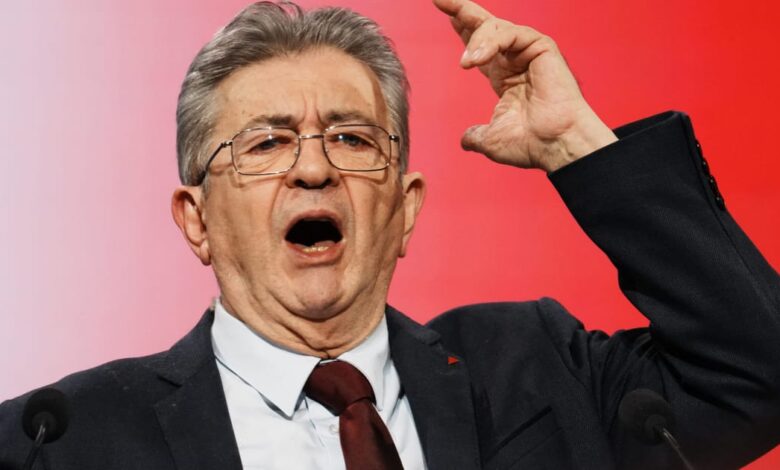
The backlash followed comments made by Mélenchon at a France Unbowed political rally on Saturday. The far-left leader stated that if elected, he would not support territorial concessions in the war-torn country “without asking the people affected whether they agree to be on one side of the border or the other.” Mélenchon specifically cited the Donbas region, arguing that its inhabitants have the right to decide whether to remain Ukrainian or join Russia. This stance places him in direct conflict with Kyiv’s insistence on territorial integrity and the international norm against recognizing changes to borders achieved through aggression.
The diplomatic spillover extends beyond the specific issue of Donbas, reflecting broader tensions within the French presidential race. In the same week, Mélenchon’s party, France Unbowed, released its official 222-page election platform, which outlines a radical restructuring of France’s security and defense posture. The document calls for an immediate withdrawal from NATO’s integrated command and a subsequent, staged exit from the organization itself. It explicitly rejects United States demands to raise defense spending to 5% of GDP, proposing instead that France develop independent military and space capabilities.
The platform advocates for the nationalization of major defense companies, including ArianeGroup, and prioritizes the production of communications, intelligence, and logistics assets currently reliant on U.S. support through NATO. Regarding Ukraine, the document does not explicitly call for an end to aid but emphasizes the necessity of a diplomatic settlement. It argues that any peace agreement must include “collective security guarantees” between the conflicting parties and the rest of Europe, while also calling for strengthened arms control over autonomous lethal systems and nuclear weapons.
French political opponents have seized on these positions to paint Mélenchon as sympathetic to Moscow. Jean-Noël Barrot, France’s centrist Foreign Minister, described the far-left leader as a “Kremlin spokesperson” following the rally. Muriel Domenach, a former French NATO ambassador and campaign figure for center-left candidate Raphaël Glucksmann, also criticized the platform, noting its brief mention of Ukraine and its call to leave NATO.
France Unbowed lawmakers have pushed back against these characterizations. Bastien Lachaud, a party lawmaker, defended the platform’s stance on Ukraine, stating that the party has consistently supported aid to Kyiv until a peace agreement is reached. “We have made it clear from the outset of the conflict that, as long as these negotiations remain unresolved, aid to Ukraine must continue without reservation,” Lachaud said. He argued that the proposal for a vote in Donbas was a matter of respecting the self-determination of the people in that specific region, rather than a concession to Russian annexation.
This episode is the latest in a series of public clashes between Ukrainian officials and French presidential front-runners. Last month, Ukrainian President Volodymyr Zelenskyy directly responded to far-right candidate Marine Le Pen’s pledge to cut financial aid to Kyiv. Polls indicate that both Mélenchon and Le Pen are strong contenders for the second round of next year’s presidential election, which will determine the successor to Emmanuel Macron. A victory for either candidate could dramatically overturn France’s current policy of staunch support for Ukraine, reshaping the geopolitical dynamics of the war.
While Mélenchon has dismissed accusations of being soft on Moscow, the alignment of his rhetoric with Russian narratives regarding the Donbas has intensified scrutiny from both Kyiv and European allies. The release of the France Unbowed platform further complicates the diplomatic environment, as it proposes a decoupling from NATO that would require a fundamental rethinking of European security architecture. For Ukraine, the immediate concern is the potential for a major Western power to prioritize diplomatic settlement over territorial integrity, a trade-off Kyiv has consistently refused to make.
As the French campaign heats up, the stakes extend beyond domestic politics. The definition of security guarantees, the role of NATO, and the legitimacy of post-war borders are being renegotiated in the public square of one of Europe’s largest democracies. Until the election is resolved, the tension between Kyiv’s demand for unconditional support and the French political shift toward negotiated settlements remains a critical variable in the broader geopolitical conflict.