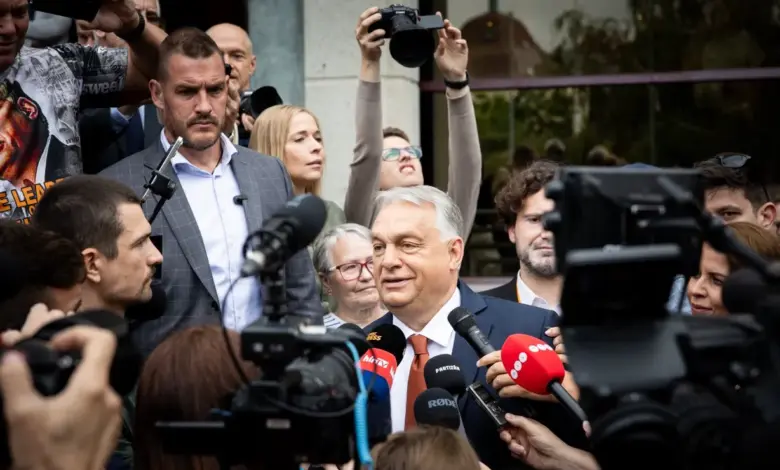
The Budapest Investigative Prosecutor’s Office has charged Hajdu with seven counts of unlawful detention involving the mistreatment of victims. According to investigative reports, the operation was initiated at the request of the National Tax and Customs Administration (NAV), which sought to intercept vehicles traveling from Austria to Ukraine carrying large quantities of US dollars, euros, and gold bars. Hajdu allegedly ordered the vehicles stopped and the occupants restrained, despite signals from NAV that there was no legal justification for the detention.
Witness testimony suggests that Hajdu remained in constant telephone contact with senior political figures throughout the nine-hour detention. Prosecutors are currently analyzing the contents of Hajdu’s mobile phone to determine the source of these orders. An internal prosecutorial document dated June 9 explicitly states that the investigation must clarify the criminal liability of Viktor Orbán, Örs Farkas, János Hajdu, and Tamás Demeter, the former deputy head of NAV for criminal and law enforcement affairs. The document identifies these individuals as those who took the “substantive decisions” for the operation.
Legal Exposure and Political Shielding
Photo by dp singh Bhullar on Pexels
The potential legal consequences for Hajdu are severe. Botond Fülöp, a prosecutor known for previous high-profile investigations, has indicated that under rules governing cumulative sentencing, the penalty for these offenses could range from two to twelve years of imprisonment, with a midpoint of seven years. Fülöp argues that a suspended sentence is highly unlikely given the gravity of the alleged violations and the official’s seniority.
However, questions remain regarding whether Hajdu will attempt to shield his former superior. Legal experts note that unless Orbán voluntarily testifies to confirm that he issued direct orders, Hajdu may remain the principal figure held criminally liable. Orbán has moved quickly to consolidate his position, appointing Hajdu as the security director of the ruling Fidesz party. In a social media post, Orbán described Hajdu as a role model who “protected the Hungarians,” dismissing the prosecution’s actions as a political witch-hunt orchestrated by the Tisza-led government.
Broader Context and Institutional Implications
The case has sparked debate over the independence of Hungary’s judicial and security institutions. Dr. Lóránt Horváth, the legal representative of Ukraine’s Oschadbank, criticized the decision to keep Hajdu at liberty, arguing that it prevents the case from reaching higher levels of political accountability. He noted that the current Chief Prosecutor, Gábor Bálint Nagy, was appointed by the former Fidesz majority, raising concerns about the thoroughness of the investigation.
Photo by Martin Guido on Unsplash
The dismissal of Hajdu was part of a broader restructuring of the Hungarian police system announced by the Tisza government. Orbán had previously characterized the dismissal as a serious security risk. The controversy also resurfaces older allegations regarding the activities of Hungarian intelligence, including reports that officers attempted to recruit European Union staff in Brussels, though these remain separate from the current “gold convoy” investigation.
Investigative journalist Szabolcs Panyi has reported that Orbán, Hajdu, and Demeter held a meeting in early June at the residence of Lőrinc Mészáros, a prominent Hungarian business figure. While the exact nature of this meeting is unclear, it adds to the scrutiny surrounding the coordination between political leadership and security services during the period in question.
The next formal step in this case will depend on the completion of the forensic analysis of Hajdu’s communications and the subsequent questioning of other named suspects. The outcome will determine whether the investigation remains focused on the operational level or expands to address the potential criminal liability of former heads of state and senior government officials.